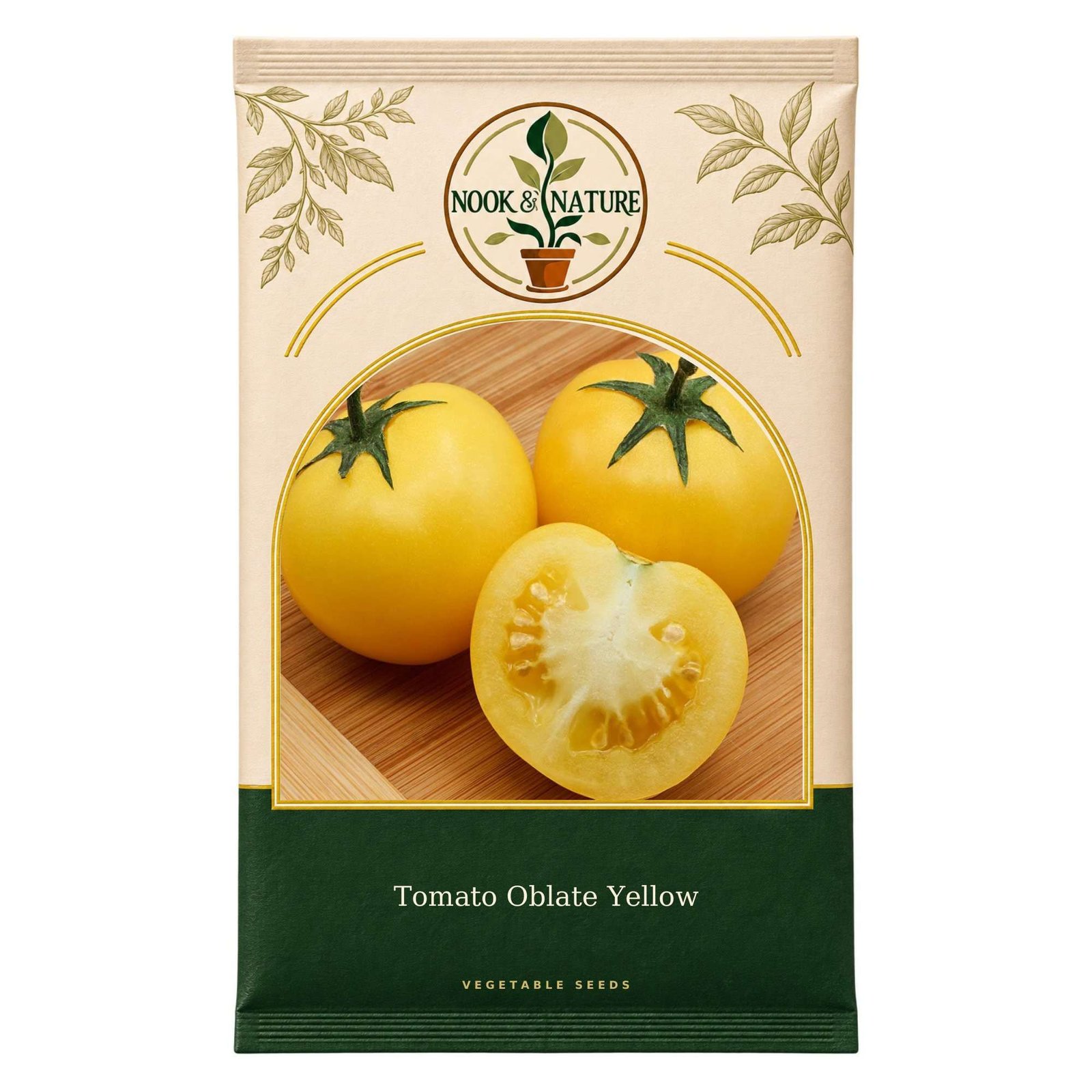
🌱 Tomato Oblate Yellow Seeds — Planting to Harvest Guide
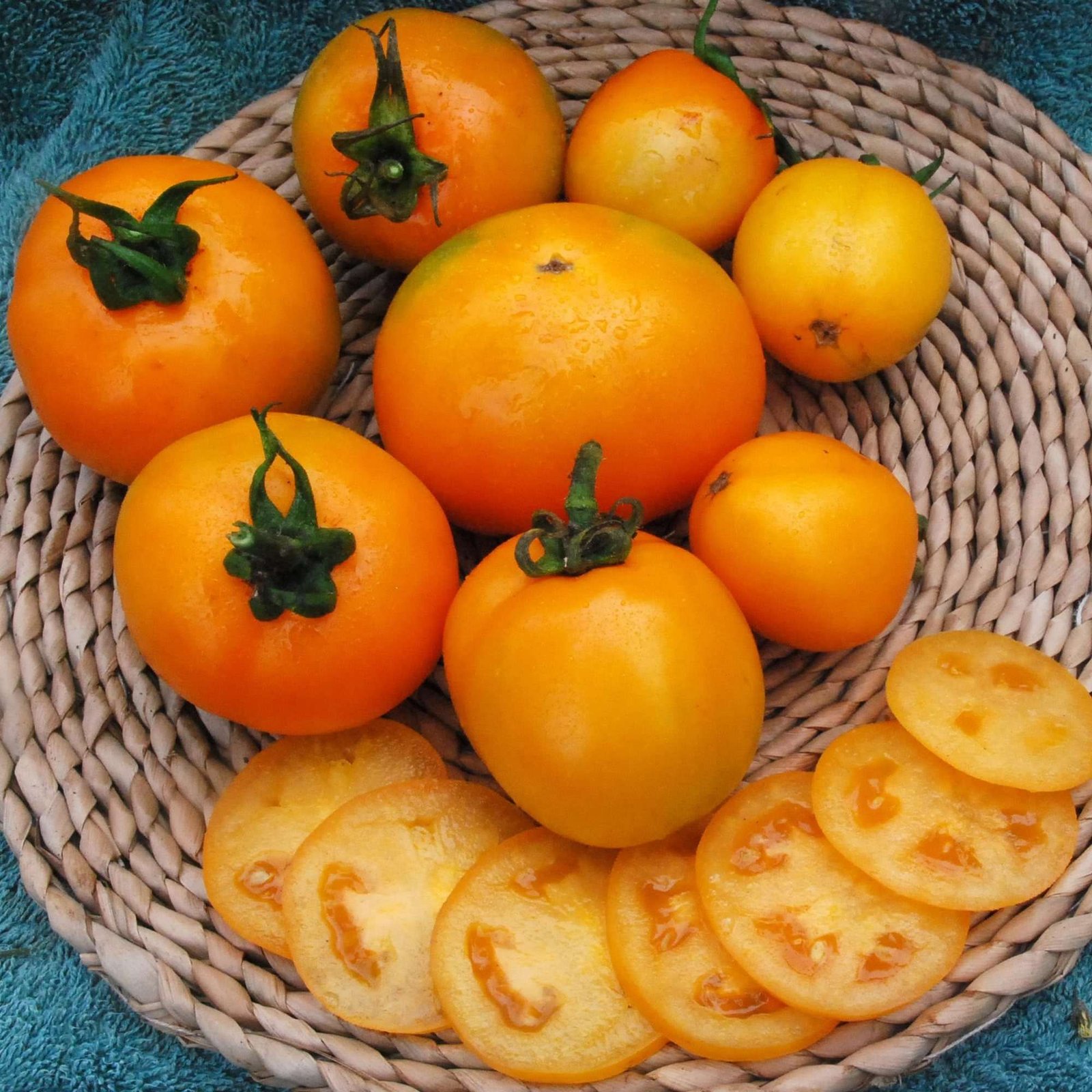
Yellow Oblate tomato is a flattened or oblate yellow-fruited tomato type. This practical guide explains sowing, plant growth, nutrition, common garden problems and harvest.
✨ Variety Highlights
- Yellow Oblate tomato is a flattened or oblate yellow-fruited tomato type.
- Grow with the crop-specific sowing and care conditions below.
📦 Recorded Sowing Facts
- Germination Temperature: 21–29°C
- Sowing Months (North India): January–March and June–July
- Sowing Months (South India): Most of the year in mild climates
- Plant Spacing: 45–60 cm between plants
- Method of Sowing: Nursery raising followed by transplanting
- Sowing Depth: Approximately 0.5 cm
- Approximate Maturity Period: Approximately 70–100 days after transplanting
1. 🌱 How to Sow & Transplant
Sow in clean seed trays, harden off seedlings and transplant into a sunny well-supported bed.
2. ☀️ Sunlight, Soil & Water
- Light: Direct sun for much of the day helps fruit development.
- Soil: Deep compost-enriched, freely draining soil.
- Water: Maintain even moisture, particularly during flowering and ripening.
3. 🌿 Fertiliser & Growth
Apply balanced crop nutrition; avoid excessive nitrogen late in growth.
4. 🐛 Common Pests & Protection
Look for aphids, whiteflies, mites and caterpillars, and remove heavily damaged fruit. Inspect leaves weekly. Use only legally approved, crop-labelled products if control is needed and follow the waiting period before harvesting.
5. 🛡️ Diseases & Prevention
Reduce early blight, bacterial leaf disease and root issues with rotation, spacing and dry foliage.
6. 🧺 Harvesting & Aftercare
Pick flattened yellow fruits at mature colour while firm; avoid pulling branches.
❓ Customer FAQ
Does oblate mean round? Oblate refers to a somewhat flattened fruit shape.
Guidance and timing are indicative. Weather, water, soil, seed storage and local climate can change growth and maturity. Always prioritise original packet instructions for this seed lot.
Only logged in customers who have purchased this product may leave a review.










Reviews
There are no reviews yet.